Amber’s story
When my one-year-old son died suddenly after a cardiac arrest, our lives were shattered. Nothing prepares you for that kind of loss — or for the unanswered questions that follow. Losing a loved one so suddenly changes everything. You’re not only grieving, but also trying to make sense of what happened, and what it might mean for the rest of your family.
Navigating that loss while managing the parallel impact on family health can be overwhelming. In the middle of grief, you’re suddenly faced with medical questions, referrals, and difficult conversations about genetic risks — things no parent or relative should have to piece together alone.
When my son died, the Sudden Cardiac Death Coroner’s Court Project wasn’t yet in place, so we weren’t offered a referral for familial cardiac surveillance, even though we would have been very interested in testing. Looking back, my husband would have benefitted from that opportunity. It wasn’t until we had further children that testing was offered, and through that process we discovered that he needed a device fitted to monitor his heart for a short QT interval — a finding that might never have been picked up otherwise. Even though this may not have been connected to our son’s death, it has brought reassurance and the knowledge that we are being monitored and protected going forward.
That’s why I believe this project is so vital. It ensures families are automatically offered the opportunity for specialist testing after a sudden cardiac death, so potential genetic risks can be identified before they cause more heartbreak.
And if you’re wondering whether it’s worth it — yes, it really is. Familial testing can feel daunting, especially when you’re grieving. It can be emotive to think about samples being taken, particularly when we associate the heart so strongly with love and affection in life, and then in bereavement. But it may help to know that if samples are needed, they’re usually taken from the spleen, not the heart itself.
And what happens for you? Well, it varies — but it might involve cardiology tests, genetic testing, and sometimes annual check-ups for family members to monitor any changes over time. These steps can offer real reassurance and, in some cases, be truly life-saving.
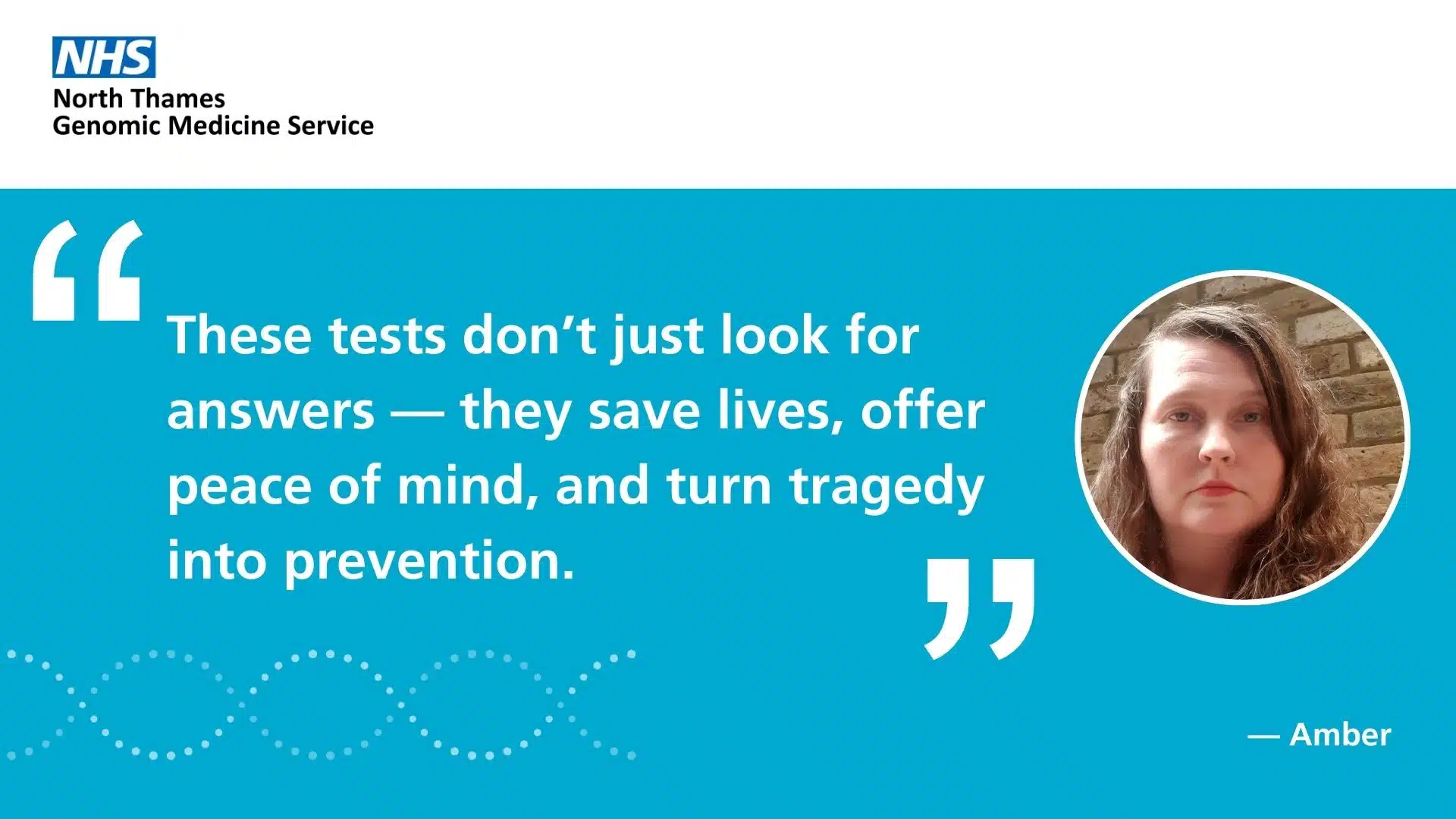
I hope that by sharing our story, I can show that these tests don’t just look for answers — they save lives, offer peace of mind, and turn tragedy into prevention.